
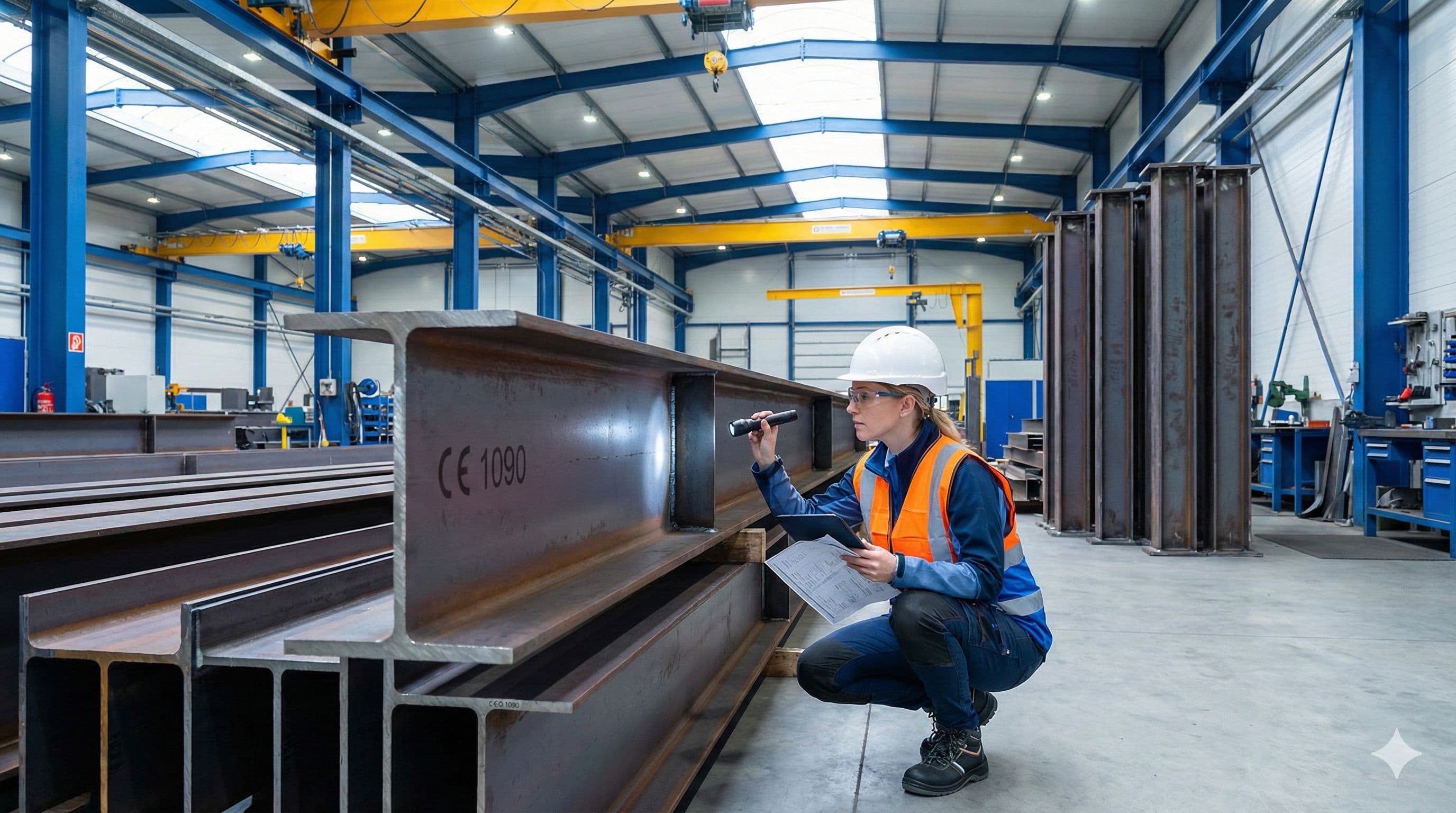
Product Certification
EN 1090 steel structure certification under ISO/IEC 17065
What is Product Certification?
Product certification is the verification and documentation of a product's compliance with specific standards, technical specifications or regulations by an independent and accredited organization. This process guarantees that the product is safe, quality and compliant with relevant legislation.
As Pars Kalite, we are a product certification body accredited by TÜRKAK under TS EN ISO/IEC 17065 standard. We perform certification of steel and aluminum structural components under EN 1090.
TÜRKAK Accreditation
Pars Kalite is a product certification body accredited by TÜRKAK according to TS EN ISO/IEC 17065 standard. This accreditation guarantees that our certification activities are compliant with international standards, independent and reliable.
Benefits of Product Certification
Certification Process
Stages of EN 1090 product certification process
Application
Manufacturer applies with application form and technical file
Document Review
Technical file, WPS, WPQR and quality documents are evaluated
Factory Audit
FPC (Factory Production Control) on-site audit is performed
Product Testing
Sampling and testing in accredited laboratories
Evaluation
All results are evaluated and decision is made
Certification
Certificate is issued and CE marking right is granted
EN 1090 Certification Scope
EN 1090 standard is the European harmonized standard for fabrication and assembly of load-bearing steel and aluminum structures. This certification, mandatory for CE marking, guarantees structural safety.
Execution Class 1
Low risk, statically loaded simple structures
Examples: Agricultural buildings, small warehouses
Execution Class 2
Medium risk, general structures
Examples: Residential, office, commercial buildings
Execution Class 3
High risk, complex structures
Examples: Bridges, high-rise buildings, stadiums
Execution Class 4
Very high risk, critical structures
Examples: Nuclear facilities, special engineering structures
Steel Construction Manufacturing
Factory, warehouse, hangar structures
Bridges and Infrastructure
Highway, railway bridges
Industrial Facilities
Power plants, refineries
Handling Systems
Cranes, conveyors, platforms
FPC System Requirements
Key components of Factory Production Control (FPC) system
Organization and Personnel
Competent personnel, definition of responsibilities and authorities
Equipment and Facility
Suitable production equipment, calibration and maintenance records
Design Evaluation
Control of structural calculations and drawings
Material Control
Incoming material inspection, traceability and storage
Production Processes
Cutting, drilling, welding, surface treatment procedures
Welding Coordination
IWE/IWT/IWS coordinator, WPS/WPQR, welder certificates
Inspection and Testing
NDT plans, visual inspection, dimensional verification
Nonconformity Management
Defect detection, corrective actions, rejection procedures
Related Standards
| Standard | Description | Scope |
|---|---|---|
TS EN 1090-1 | Steel and Aluminum Structural Components - Part 1 | Conformity assessment requirements |
TS EN 1090-2 | Technical Requirements for Steel Structures | Steel structure fabrication and assembly rules |
TS EN 1090-3 | Technical Requirements for Aluminum Structures | Aluminum structure fabrication and assembly rules |
TS EN ISO 3834 | Quality Requirements for Fusion Welding of Metallic Materials | Welding quality management system |
TS EN ISO 14731 | Welding Coordination - Tasks and Responsibilities | Welding coordinator competencies |
Surveillance and Certificate Validity
EN 1090 certificates are subject to continuous surveillance audits. The effectiveness of the FPC system is checked through annual surveillance audits. Certificate validity depends on maintaining production quality.
- First year: At least 2 surveillance audits
- Following years: At least 1 surveillance audit annually
- Additional audit may be required for significant changes
- Certificate may be suspended for nonconformities
Certify Your Products
Contact us for certification of your steel and aluminum structural components under EN 1090. Open your products to the European market with CE marking.