
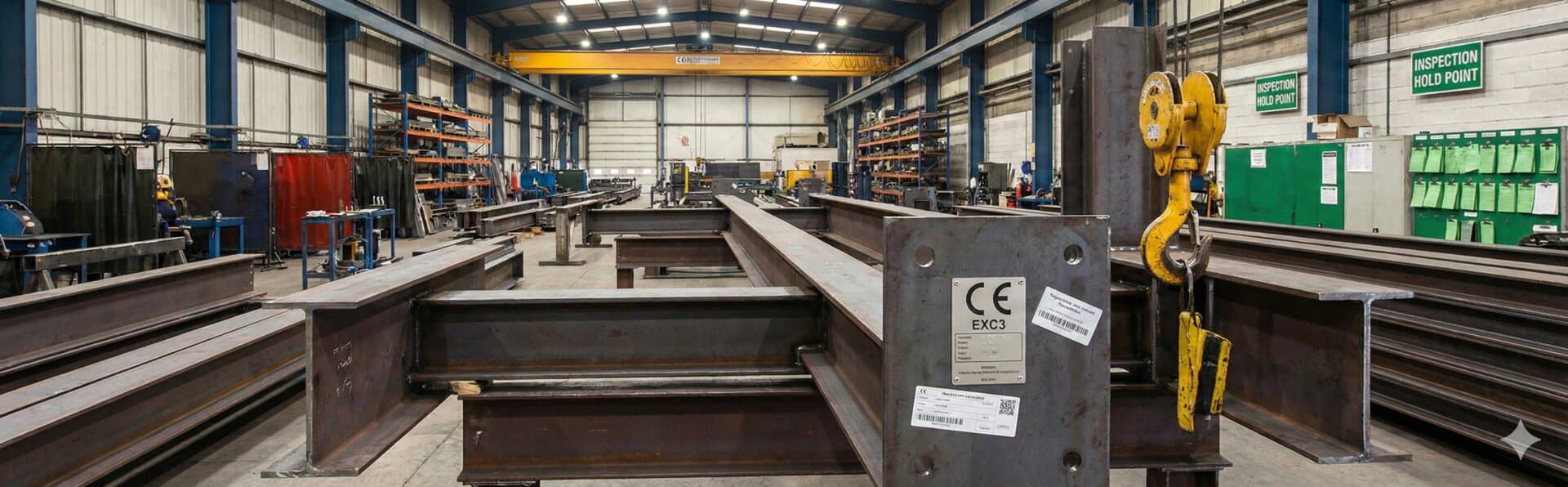
EN 1090 Factory Production Certificate
CE Marking for Steel and Aluminum Structural Components
What is EN 1090?
EN 1090 is the European standard that defines technical requirements for the manufacturing and assembly of steel and aluminum structural components. Since July 1, 2014, it is a legal requirement for all steel and aluminum structural components placed on the EU market to comply with EN 1090 standard and bear the CE mark.
Basic Principle
EN 1090 certification requires the manufacturer to establish a Factory Production Control (FPC) system, proving that the manufactured structural components are of stable and repeatable quality. This system covers all production processes from material procurement to final product delivery.
Advantages
Competencies Provided
Standard Sections
EN 1090 standard consists of three main sections
EN 1090-1
Conformity Assessment
Conformity assessment requirements and FPC processes for CE marking
EN 1090-2
Steel Structures
Technical requirements for manufacturing and assembly of steel structural components
EN 1090-3
Aluminum Structures
Technical rules for manufacturing aluminum structural components
Execution Classes (EXC)
EN 1090-2 defines four execution classes according to the risk level of structures. Each class determines different quality requirement levels.
Execution Class 1
Basic requirements for low-risk structures
Agricultural structures, simple steel constructions, storage buildings
Execution Class 2
Standard requirements for medium-risk structures
Most buildings, industrial structures, commercial buildings
Execution Class 3
Comprehensive requirements for high-risk structures
High-rise buildings, large bridges, stadiums, airport terminals
Execution Class 4
Maximum quality requirements for highest risk
Nuclear facilities, special critical structures, structures in seismic zones
Industry Importance
EN 1090 is the cornerstone of the construction sector in Europe and many countries that reference European standards. It is illegal to place a structural steel or aluminum product on the market without this certificate.
- It is the primary guarantee for designers, contractors and end users that the product is safe.
- It mandates quality and traceability throughout the entire supply chain (from material manufacturer to final assembler).
| Sector | Application Areas |
|---|---|
| Construction and Building Sector | Factory buildings, warehouses, shopping malls, stadiums, residences |
| Infrastructure Projects | Steel bridges, viaducts, pedestrian overpasses |
| Energy and Industrial Facilities | Power plant structures, platforms, pipe and cable bridges |
| Telecommunications and Broadcasting | Towers, poles, antenna support structures |
| Special Structures | Agricultural structures, silos, crane runways, fairground constructions |
Certification Process
EN 1090 CE marking certification stages
Preliminary Assessment
Current situation analysis and EXC class determination
FPC Setup
Establishment of Factory Production Control system
Approval Audit
Audit by independent body
CE Marking
Certificate delivery and CE mark usage rights
Related Standards
Standards that should be applied together with EN 1090
EN ISO 3834
Welding quality requirements and production control
EN ISO 9606
Welder qualification exam and certification
CPR 305/2011
EU Construction Products Regulation compliance
EN 1090 Certification Support
Our expert team is with you in Factory Production Control setup, EXC class determination and CE marking processes. Contact us for our internationally valid certification services.
Get Free Consultation